
PFE Interview Questions: The Ultimate Guide to the 10 You’ll Be Asked
The PFE interview is where your academic journey becomes a professional opportunity. Based on real hiring patterns in Morocco, these are the 10 most common PFE interview questions, and the exact strategies BLC members use to answer them with confidence.

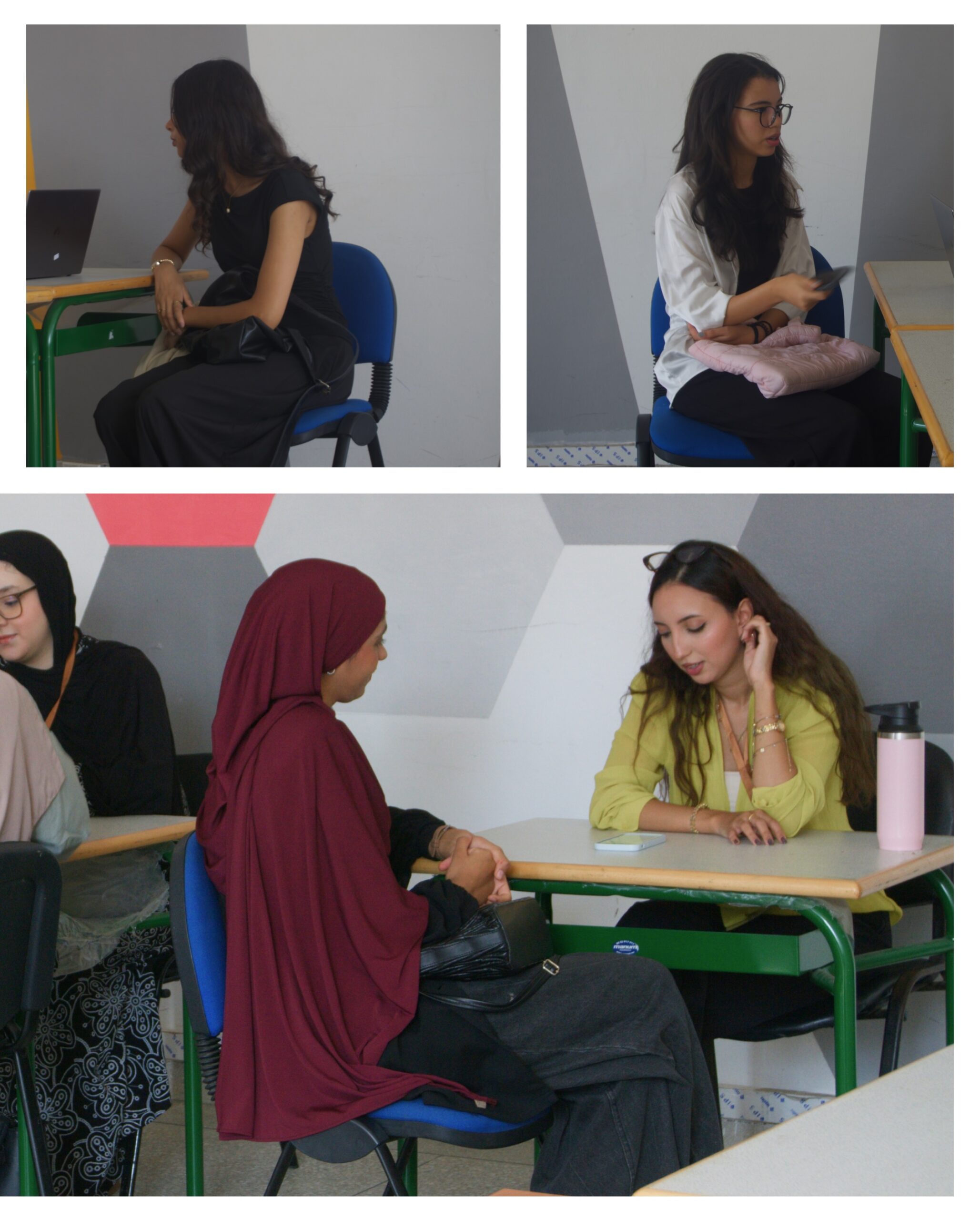
In Morocco, the PFE (Projet de Fin d’Études) is not just a graduation requirement; it is your first real professional negotiation. According to ANAPEC data, nearly 60% of Moroccan graduates land their first job through their PFE host company. That means the interview in front of you is far more than a formality: it is the moment your career starts.
Yet most students walk into that room underprepared. They rehearse generic answers, they forget to research the company, and they freeze when asked a question they did not expect. This guide fixes that. Below are the 10 most common PFE interview questions in Morocco, with a concrete answering strategy for each, using the same frameworks BLC members practice during our masterclasses and case competitions.
1. “Tell me about yourself.”
Why they ask it: The recruiter wants to test your ability to synthesize, your oral fluency, and whether your background actually fits the role. This is your 90-second pitch, and first impressions are formed here.
How to answer: Use the Past, Present, Future structure. Briefly cover your academic path, highlight the one project that shaped your interest in this field, and close with why this specific PFE excites you. Do not recite your CV; tell a coherent story that ends naturally at this interview.
2. “Why our company and not another?”
Why they ask it: This is the motivation test. The recruiter wants to know whether you researched the company or sent 50 identical applications.
How to answer: Never give a generic answer. Mention a recent project, a published number, or a cultural element that genuinely connects to your skills. Example: “I saw you recently launched a digital transformation initiative. My academic project focused on exactly that, and I’d love to contribute to the next phase.”
“The candidates who stand out are not the ones with the highest grades; they are the ones who can connect their academic work to a real business problem the company is facing right now.”
3. “Walk me through your academic project (or your PFE subject).”
Why they ask it: This tests your ability to structure a problem, apply a methodology, and draw conclusions, which is exactly what you will do during your PFE.
How to answer: Use the STAR method (Situation, Task, Action, Result). Describe the context, the problem you had to solve, the methodology you chose and why, and most importantly, the concrete results. Quantify them whenever possible.
4. “What are your strengths and weaknesses?”
Why they ask it: To assess self-awareness and professional maturity. This question reveals whether you know yourself as a future employee.
How to answer: Pick strengths directly tied to the role (rigor, analysis, teamwork). For weaknesses, be honest but strategic: choose a skill you are actively improving. Example: “I’m very comfortable with financial analysis, but I want to develop my public speaking. That’s actually why I joined BLC’s case competitions.” This shows a growth mindset, not a flaw.
5. “Where do you see yourself in 5 years?”
Why they ask it: To gauge your ambition and whether your trajectory fits the company’s long-term needs.
How to answer: Show vision but stay flexible. Example: “In 5 years, I’d like to have built deep expertise in [field], ideally within a structure like yours, evolving toward a role with more responsibility. But I remain open to opportunities that let me keep learning.”
6. “How do you handle stress and pressure?”
Why they ask it: PFE projects come with tight deadlines and real stakes. They want to know whether you can perform under pressure.
How to answer: Give a concrete example. Use STAR to describe a moment you managed a project under time pressure, and explain the techniques you used (prioritization, planning, communication). End with the positive outcome.
7. “Give an example of teamwork, how do you handle conflict?”
Why they ask it: A PFE is rarely a solo project. The recruiter is evaluating your collaboration and conflict-resolution skills.
How to answer: Again, use a concrete example. Describe a situation where you worked with people of different profiles. Highlight your listening, diplomacy, and ability to find common ground. Never blame others; focus on your role in resolving the issue.
8. “What are your technical skills for this role?”
Why they ask it: This is the technical filter. Depending on your field (finance, IT, marketing), expect a practical question: a mini case, a code snippet, a financial calculation, or a pricing exercise.
How to answer: Prepare by reviewing your core coursework and bringing concrete examples of projects you have completed (academic, personal, or through BLC). If you do not know an answer, never bluff. Say: “I haven’t worked with that specific tool yet, but here’s how I’d approach learning it quickly…” This demonstrates adaptability.
Financial Modeling
Three-statement models, Excel, and valuation, practiced in BLC masterclasses.
Data Analysis
Power BI, SQL, and dashboards: the tools Moroccan recruiters now demand.
Digital Marketing
SEO, social media strategy, and campaign analytics for marketing PFE roles.
Case Structuring
Frameworks and problem-solving under pressure, built through case competitions.
9. “What are your availability and salary expectations?”
Why they ask it: This is the logistics and negotiation question. Internship compensation is not legally mandatory in Morocco, but serious companies typically pay between 1,500 and 7,000 MAD per month depending on size and sector.
How to answer: Research the range before the interview. Then answer: “I’m available from [date] for [X] months. Regarding compensation, I’m expecting a range of [X] to [Y] MAD depending on the missions and benefits.” Stay flexible but informed; this signals professionalism, not greed.
10. “Do you have any questions for us?”
Why they ask it: Not asking a question is often read as a lack of interest. This is your last chance to show motivation and clarify what matters.
How to answer: Prepare 2 to 3 questions in advance. Ask about the substance of the internship, not just logistics. Examples:
- “What will the exact PFE subject be, and what deliverables are expected?”
- “Who will be my tutor, and how involved will they be in my supervision?”
- “Does the company typically hire its PFE interns at the end of the internship?”
PFE Interview Questions: Frequently Asked Questions (FAQ)
How long does a PFE interview usually last in Morocco?
Most PFE interviews last between 30 and 45 minutes. Large companies (banks, OCP, telecoms) often run two rounds: an HR interview and a technical or managerial interview.
When should I start preparing for my PFE interview?
Start at least 3 to 4 weeks before your first interview. Large companies post PFE offers from September to October, with peak recruitment in November to December for spring internships. Prepare before the peak, not during it.
Should I bring a printed CV to a PFE interview?
Yes. Always bring two printed copies of your CV and your cover letter, even if you applied online. It shows preparation and gives the recruiter a physical reference during the conversation.
What is the most common mistake candidates make in PFE interviews?
The most common mistake is not researching the company. Recruiters immediately notice when a candidate cannot explain why they applied to that specific company. A close second is giving generic answers without concrete examples.
How can I practice for my PFE interview on my own?
Record yourself answering each of the 10 PFE interview questions above, review your answers for structure and clarity, and rehearse the STAR method out loud. You can also ask a friend or classmate to run a mock session with you.
Follow the Business Leaders Club on LinkedIn, Instagram, and TikTok for more career guides, masterclass dates, and PFE resources.
Follow the Business Leaders Club Journey on Instagram
Get real-time updates from BLC: masterclass dates, event announcements, and behind-the-scenes content.
@business_leaders_clubBuild. Lead. Change.
Step away from purely theoretical study and start building real leadership experience. Join the Business Leaders Club or partner with our team today.
Get in touch with BLC